

For more tips, check out our story on Everything You Need for Your Yoga Practice. Yet despite these stereotypes, there are still a few good eggs in the app store — like Nike Training Club. We do recommend paying close attention to the equipment requirements before hopping into a session, though.
Fitness Guides
Where other weight loss apps help you hit goals through caloric deficits, Noom acts as a coach to help you develop the necessary habits for maintaining your desired body weight. If you are curious about your technique in a given workout, you can record yourself and send it to your coach for analysis and feedback. This may be a chore for some, but it’s also an example of the great lines of communication at play with Future. You can chat back and forth with your instructor through the app, and even have the opportunity to video call if you need a more involved discussion. We also gave the accountability a 5 out of 5, as your coach keeps you motivated with daily check-ins, reminders to log your workouts, and tips on where you can improve. Not to mention, a personal trainer is great for injury prevention and tailoring your workouts to any pre-existing aches or pains, says Felton.
Top Picks for Best Personal Training Apps
She notes there is a supportive online community, challenges you can join, and the ability to add your workout program to your calendar. When you use the calendar option, your workouts come up as appointments with calendar reminders, which is ideal for anyone establishing a routine. If you’re all in on bodyweight training, BetterMe is one of the best options around.
How much do workout apps cost?
In fact, research shows1 that adding either weight or reps can work well to increase muscular adaptations to training. There’s a basic community feed that allows you to view others’ workouts, but not much else. It’s a simple, streamlined app that’s very beginner-friendly, but it’s not the best choice if you prefer to have access to more advanced features.
Best for Personal Training
Thanks to technology, personal trainers now have the capability to provide tailored fitness programming through smart devices. One way trainers do this is through apps, which you can download on your smartphone or tablet, enabling you to benefit from individualized support right from home. Every client gets a certified fitness professional who will prescribe training programs, follow up daily to assess progress, make program adjustments as needed, and offer accountability. Working out with a personal trainer also acts as a built-in cheerleader and problem solver, says Felton. “Having a professional in the field to troubleshoot when you’re not seeing progress goes a long way, and there’s a lot to be said for accountability,” she explains. “If you know no one is checking in, you’re less likely to show up for yourself when motivation fades.” That applies IRL and with personal training apps.
Instruction
We selected Pliability as the best app for recovery and mobility because it addresses an area most people neglect yet could benefit from enormously. Poor mobility causes compensatory movement patterns, increases injury risk, and limits performance. The app includes plenty of content for beginners but also features highly specialized routines for elite athletes, Olympic lifters, and those training intensively. This range makes it valuable whether you’re just starting to address tight hips or you’re an athlete seeking marginal gains.
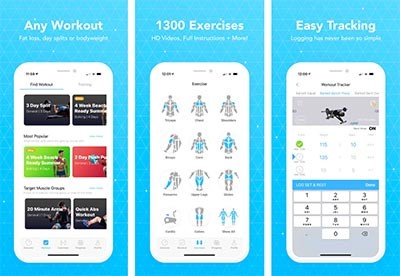
Every exercise includes clear instructions, targeted muscle groups, and difficulty ratings. This educational approach helps beginners build confidence while learning correct technique from day one. Some apps are meant for those who are entirely self-sufficient with no community or coach interaction, some offer fully customized coaching from a personal trainer, and many fall somewhere in the middle. If you’re going to be training in your garage gym, you’ll want to carefully consider what sort of home gym equipment may be required for the app you’re considering. Many apps have minimal requirements, and are designed to work with only your bodyweight and some light dumbbells.
Buying Guide: What to Look for in a Personal Training App
- These types of apps typically have a monthly, quarterly, or annual billing system rather than billing you per session or for a pack of 10.
- We like the workout variety here, too, however, there aren’t any barbell training options — like deadlifts, front squats, or other barbell back exercises — our tester said.
- Now, to track your daily caloric intake, Noom does require you to log each meal.
- The Chair Yoga section is particularly impressive for older adults or anyone wanting a very gentle entry point into regular movement.
- The majority of apps on this list offer free trials too, so you can test before committing.
- JuggernautAI compiles your information to create a personalized powerlifting and powerbuilding workout experience.
Both the paid and free versions earn a 5-out-of-5-star rating for equipment demands. TR[Ai]NER by Element 26 is highly adaptable based on the information you give it. For example, our tester told the app that he also trains for Olympic weightlifting. It recommended some lower-body accessories he could perform without accumulating too much fatigue. Plus, each session will also provide recommended RPE (rate of perceived exertion) and tempo, and you can swap movements based on your skill level or what’s available in your gym.
Best workout app for yoga
This app received high scores in nearly every category, but it’s a little limited in workout variety and interactive features. The program is centered around getting stronger and improving the big three lifts (squat, bench, and deadlift). If you’re not interested in powerlifting (or powerbuilding—a combination of bodybuilding-style training and powerlifting), this likely won’t be the best workout app for you.
Best Workout App Overall: Future
Ben Patrick’s revolutionary knee and joint strengthening system that’s helped thousands reverse pain and unlock athletic potential. Popular stretching app with instructor-led classes and fun challenges to help you become more flexible. Research shows that just two strength sessions per week can boost brain function, improve metabolism, reduce aches, regulate stress hormones, and lower chronic inflammation.
Best Workout App for Strength Training: Boostcamp

Unfortunately, we weren’t too thrilled with the user interface, rating it a 3 out of 5. “There’s not much here that I couldn’t already see in my Apple Health app,” our tester said. An iFIT subscription is available for $39 monthly, but we appreciate how the platform offers discounts for more dedicated subscriptions, meaning you can save money with longer commitments.
For decades, people were told never to let knees go past toes during squats or lunges. ATG flips this on its head, teaching you to safely load your joints through full ranges of motion, building bulletproof strength in positions most programs avoid. Users consistently praise the quality of coaching, noting coaches are knowledgeable, responsive, and genuinely invested in their success.
Sessions run from just 7 minutes up to 30, which makes it easy to fit a session in regardless of how busy the day gets. I found the shorter sessions surprisingly effective, and the variety meant I rarely felt like I was doing the same thing twice. The app includes targeted programs for specific skills, full-body strength development, and mobility enhancement. This comprehensive approach ensures balanced progression rather than creating imbalances from best apps for fitness accountability overspecializing. The platform is incredibly user-friendly, with workout schedules clearly laid out and the ability to filter by equipment, duration, and body focus.